
Understanding Herniated Discs (And What To Do About Them)
You start experiencing a sharp, burning pain in your lower back that worsens if you stay in one position too long. You’ve also noticed pain that shoots down your leg and numbness in your foot. You have no idea what’s going on, and the discomfort is starting to negatively affect your quality of life.
Sound familiar?
All those symptoms point to a lumbar herniated disc, a condition that affects the cushiony intervertebral discs located in your spine. Herniated discs are more common than you might think–in fact, you may have developed one without even realizing it, as they don’t always cause symptoms. But when they do cause symptoms, they can be excruciating.
Fortunately, the team at Millennium Physical Therapy offers several solutions to help you resolve and prevent herniated discs. Today, we wanted to explore the basics of herniated discs, including their causes, symptoms, and effective treatment techniques. Keep reading to learn more!
What Exactly is a Herniated Disc?
Your spine’s intervertebral discs play an important role in keeping the vertebrae from rubbing against each other. Sometimes, though, those discs can bulge outward or rupture: what’s called a herniated disc. If the damaged disc presses against a nearby nerve root, it causes symptoms.
That’s why many people develop a herniated disc and do not know it–because their herniated disc doesn’t affect any nearby nerve roots. But when a herniated disc does affect a nerve root, here’s what to expect:
- Burning pain
- Pain that radiates into the extremities
- Numbness or tingling that radiates into the extremities
- Weakness
The location of your symptoms can give you a general idea of the location of your herniated disc. While any disc in the spine can herniate, herniated discs typically occur in the neck (cervical spine) or lower back (lumbar spine).
- Cervical herniated discs will cause symptoms through your shoulder, arm, and hand.
- Lumbar herniated discs will cause symptoms through your lower back, buttocks, thigh, lower leg, and foot.
What Causes a Herniated Disc?
There are two main causes for herniated discs, and they may develop due to a blend of factors:
Disc Degeneration
- As we get older, our intervertebral discs naturally start to dry out and become less flexible, making them more likely to tear or rupture, even with relatively minor bends or twists.
Injury
- When a younger person gets a herniated disc, it’s usually the result of an injury related to improper lifting techniques, like twisting as you lift or using your back muscles instead of your legs.

How Can Physical Therapy Help Resolve a Herniated Disc?
The good news is that herniated discs rarely require surgery or other invasive treatment options. Often, symptoms fade on their own. However, physical therapy can facilitate that process and–more importantly–help prevent future herniated discs!
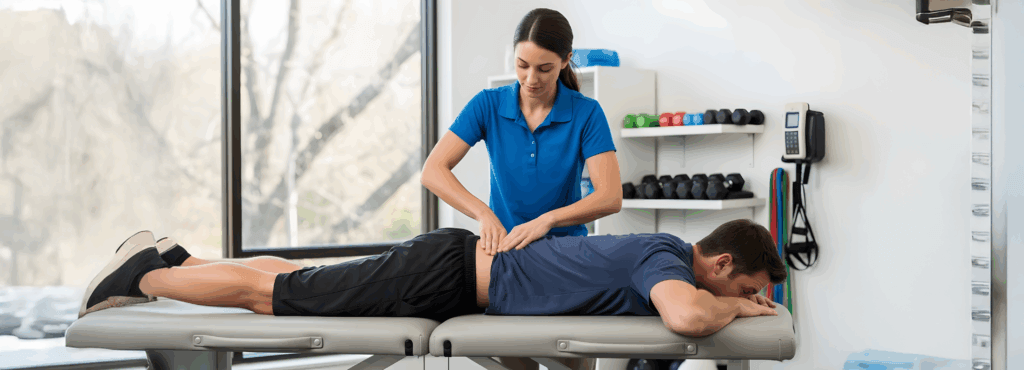
Our team will perform a comprehensive evaluation in which we review your health history and current symptoms and conduct a detailed physical exam to look for any muscular weaknesses or other issues that might have contributed to your condition. Next, we’ll create a customized treatment program blending various treatment options:
Manual Therapy
- These hands-on techniques, which include spine mobilizations, can help reduce pain and improve spinal function.
Therapeutic Exercises
- We’ll guide you through a customized, targeted exercise program. We’ll start with mobility exercises to regain your range of motion, helping you move without discomfort. Then, we’ll work with you to strengthen your core and back muscles to support your spine and prevent future injury.
Posture and Body Mechanics
- We’ll show you how proper posture and movement patterns can significantly reduce pressure on the spine and prevent further disc issues.
Suspect You’ve Got a Herniated Disc? We’re Here to Help!
If you’re struggling with the symptoms of a herniated disc–whether in your neck or lower back–the Millennium Physical Therapy team can help you find long-term relief! Schedule an appointment with us today to get started.
Sources: https://www.ncbi.nlm.nih.gov/pmc/articles/PMC10683841/, https://www.ncbi.nlm.nih.gov/books/NBK441822/
Exercise of the Month
Standing Lumbar Self-Traction (Lower Back)
Stand in front of a sturdy counter or bench about waist height. Place your hands firmly on the surface and slowly bend your knees slightly while leaning your weight into your arms. Allow your hips to drop downward, feeling a gentle stretch and decompression in your lower back. Hold the position briefly, then return to standing. 3 Sets, 30-Second Hold. (Materials needed: counter or bench)

Five Simple Tips for Preventing Herniated Discs
While herniated discs do become more likely as we age, they aren’t inevitable. In fact, you can make several simple changes right now to reduce your likelihood of developing one.
1. Stop smoking.
- Smoking hastens the natural degenerative process in your intervertebral discs, meaning they dry out and lose flexibility much faster.
2. Exercise regularly.
- Exercise is an excellent way to manage back pain in general, and targeted core exercises (such as bridges or planks) can help strengthen the muscles that support and stabilize your spine.
3. Practice safe lifting techniques.
- Make sure you use proper lifting techniques every time! Our team can provide you with more detailed information, but here are some guidelines to get you started:
- Lift from your legs, not your back.
- Don’t twist while you lift.
- Grab a friend if something’s too heavy for you.
4. Avoid sitting too much.
- Prolonged sitting can put excess strain on your spine, especially your lower back. If you have a sedentary job, get up and move around every 30-45 minutes. Perform some simple stretches or walk around the office.
5. Visit Millennium Physical Therapy.
- If you’re concerned about your spinal health, schedule an appointment with our team. We can conduct a comprehensive assessment and provide personalized guidance on what you can do to avoid herniated discs and other spine-related issues.

Blueberry Muffin Bread
Blueberry Muffin Bread! A fluffy, tender muffin batter made with Greek yogurt and vanilla, swirled with plenty of sweet blueberries and baked into a no-fuss loaf. This whole-grain, higher-protein blueberry bread is extra special, thanks to ribbons of blueberry jam and clusters of cinnamon crumble baked right on top. It’s easier than you’d think (just one bowl!) and the perfect treat to enjoy anytime.
Ingredients:
- 1 stick (8 tablespoons) salted butter, melted
- 3/4 cup brown sugar
- 1 cup plain Greek yogurt
- 3 eggs
- 2 teaspoons vanilla extract
- 1 1/2 cups whole wheat or all-purpose flour
- 2 teaspoons baking powder
- 1 teaspoon salt
- 1 1/2 cups fresh or frozen blueberries
- 1 tablespoon whole wheat or all-purpose flour
- 1 tablespoon granulated sugar for sprinkling (optional)
- 2 tablespoons blueberry jam
The Spice Paste:
- 1/2 cup dark brown sugar
- 1 tablespoon all-purpose flour
- 1 tablespoon cinnamon
- 2 tablespoons salted butter, melted
Instructions:
1. Preheat the oven to 350° F. Line a 9×5 inch bread pan with parchment paper.
2. In a bowl, whisk together the melted butter, brown sugar, yogurt, eggs, and vanilla. Add the flour, baking powder, and salt. Mix until fully combined.
3. Toss the blueberries with 1 tablespoon flour. Mix the berries into the batter.
4. Pour the batter into the prepared pan. Sprinkle with sugar (optional), then swirl in the blueberry jam, leaving streaks of jam throughout the batter.
5. To make the crunch. Mix the butter, brown sugar, flour, and cinnamon. Arrange the clumps over the batter. Bake for 55-60 minutes or until the center is just set.
6. Remove, slice, and enjoy with butter and flaked sea salt.